When you think of a golf tournament, what is the first image that comes to mind? A nerve-filled tee shot, a birdie that turns the match around, and the roar of the gallery. That is how most sporting events are remembered. But THE CJ CUP Byron Nelson, an official PGA Tour event in the United States, tends to stay in people’s memories a little differently. For many, the food is remembered just as vividly as the competition itself.
In fact, among the players who have attended the tournament, conversations about the food come up with remarkable frequency. Praise for the Players Dining has already become well known, and World No. 1 Scottie Scheffler even mentioned it as one of the most memorable parts of the event. For food to leave that kind of impression at a sporting event says something unusual. So how did THE CJ CUP earn that reputation?
먹으러 가는 골프대회가 있다?
골프대회 보러 갔는데요, 제일 기억에 남는 게 음식이라니. 도대체 어떤 음식이길래 그럴까요?
경기장 음식이라고 하면 다들 기대 안 하잖아요. 그냥 배고프니까 간단히 때우는 정도죠. 그런데 이 공식이 통하지 않는 대회가 하나 있습니다. 이 대회를 다녀온 선수들이 유독 많이 하는 말이 있거든요. “여기 음식 진짜 좋다!” 심지어 어떤 선수는 PGA 투어 대회 중 최고였다고 했고, 어떤 선수는 가장 기억에 남는 게 음식이었다고 했습니다.
스포츠 경기에서 음식이 이렇게까지 존재감이 크다고요? 바로 미국 PGA 투어 정규 대회, 더 CJ컵 이야기입니다. 조금 신기하죠. 그런데 생각해 보면 이 대회는 애초에 결이 좀 다릅니다. 보통은 경기 보고 박수 치고 집에 가면 끝인데, 더 CJ컵은 그사이에 자꾸 사람을 붙잡아요. “이것도 한번 먹어볼래?”, “이건 어때?”하면서요. 그리고 그 중심에 있는 게 바로 ‘비비고’입니다.
단순히 잔디밭 구석에 로고만 걸어두는 스폰서가 아닙니다. 대회장 한복판에 아예 판을 깔아버렸어요. 그 상징 같은 공간이 HOUSE OF CJ. 여러 브랜드가 모인 공간인데도, 유독 비비고의 존재감이 크게 느껴집니다. 들어가 보면 비비고 제품들로 꽉 채운 대형 벽이 눈에 딱 들어오고 틱톡 챌린지를 찍는 사람들 사이 비비고 누들 바가 마련돼 있어요. 그냥 “아, 한국 음식이네”하고 지나가는 게 아니라 어느새 보고, 찍고, 맛보고, 기억하게 되는 구조인 거죠.
더 재밌는 건 대회장 안쪽입니다. Hole 7에서는 분위기가 확 달라집니다. 여긴 거의 골프장 안에 한강 변 코리안 레스토랑이 생겼다고 해도 되는 수준이에요. 흑백요리사 유용욱 셰프에 미쉐린 2스타 박정현 셰프까지 모여 직접 만두, 치킨, 김치로 메뉴를 만들어 내는데 “이걸 여기서 먹을 수 있다고?”싶은 음식들이 나옵니다.
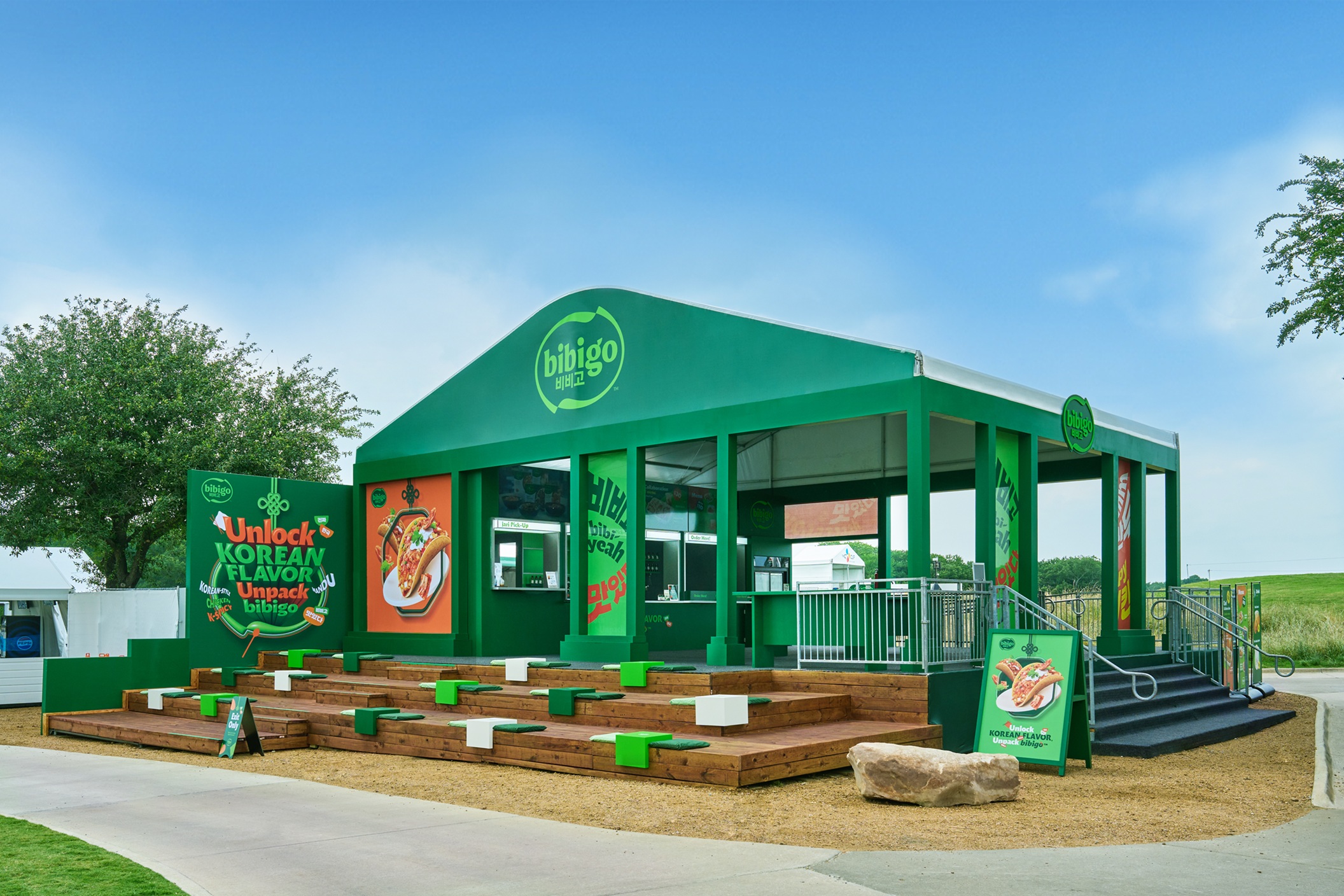
Hole 17은 비비고 홀이라고 해도 될 만큼 좀 더 본격적입니다. 고추장 타코같이 가볍게 즐길 수 있는 메뉴들에 한국 증류주까지 붙습니다. 문배술, 가무치소주를 활용한 한국식 칵테일을 한식에 페어링할 수 있도록 만든 건데요. 단순히 ‘먹어봤다’가 아니라, “이 조합 괜찮은데?”를 이끌어내기 위함이죠.[김1.1]
더 CJ컵은 어느새 K-Food를 가장 맛있게 체험하는 현장이 되어가고 있습니다. 선수들이 음식 이야기를 먼저 꺼내는 이유도, 갤러리들이 비비고 컨세션(Concession)을 그냥 지나치지 못하는 이유도 결국 비슷할 겁니다.
이제 K-푸드는 단순히 맛있는 음식에서 끝나지 않습니다. 한 번 맛보고, 참여하는 사이에 하나의 경험이 되고, 그 경험은 자연스럽게 브랜드와 문화로 이어지죠. 더 CJ컵은 바로 그 변화를 보여주는 무대입니다. 스포츠를 즐기러 온 사람들에게 한식과 한국 문화를 자연스럽게, 그리고 맛있게 기억하도록 만드는 방식.
이제 매대 위 제품을 넘어, 현장에서 즐기고 공유하는 경험으로 확장되고 있는지도 모르겠습니다. 과연 올해 텍사스에서 펼쳐진 더 CJ컵에서는 또 어떤 경험이 사람들의 기억에 오래도록 남게 될까요?
More Than a Tournament to Watch—A Tournament to Experience
The answer lies in the fact that the event does not end with spectatorship. Most golf tournaments are structured around watching the game, cheering on the players, enjoying the atmosphere, and heading home. THE CJ CUP adds another layer to that flow. It creates an experience in which visitors naturally eat, explore, participate, and remember.
At the center of that experience is bibigo. Rather than appearing simply as a sponsor logo, the brand actively designs the on-site experience itself. The most symbolic space for that is HOUSE OF CJ.
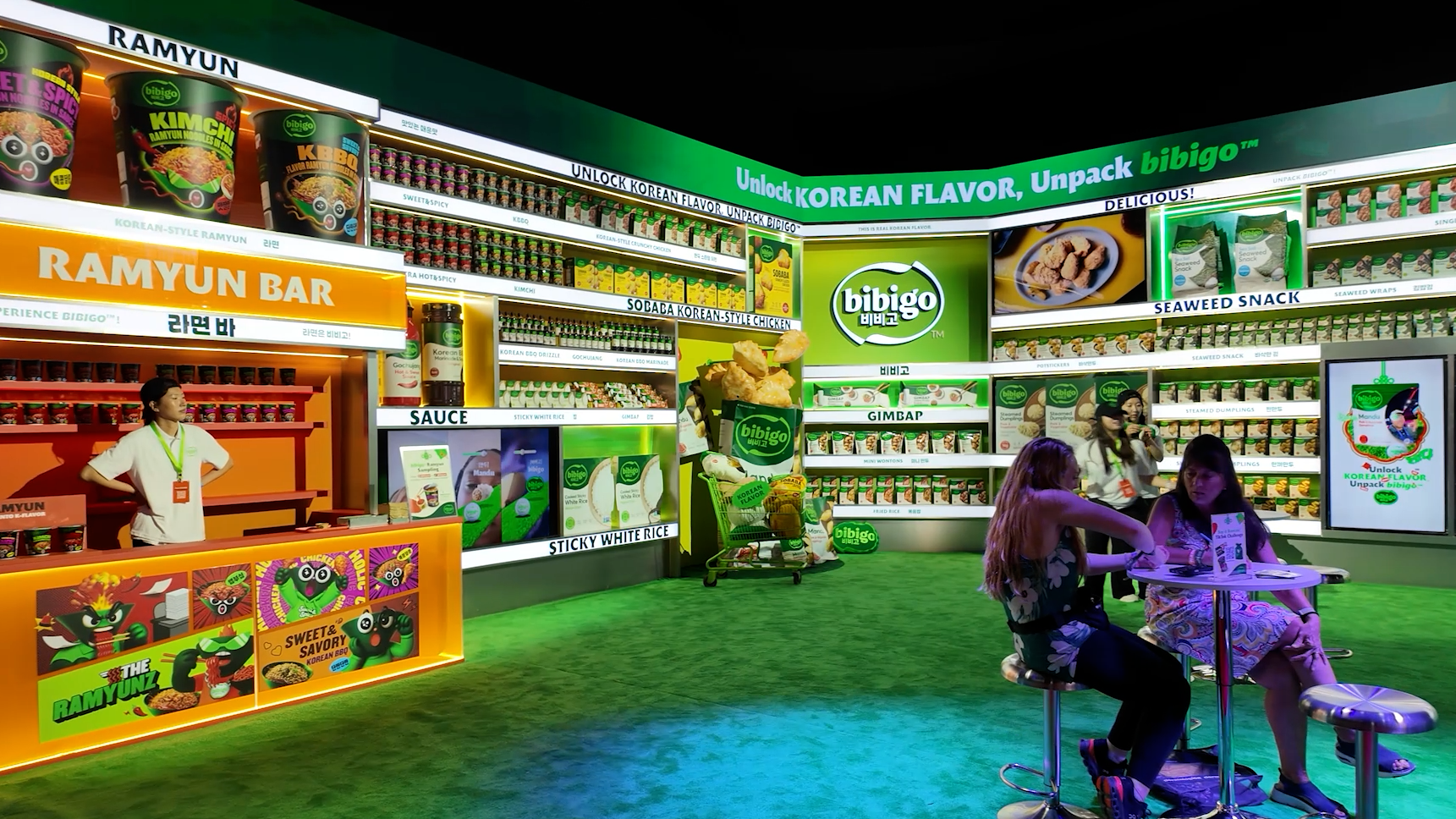
First introduced last year, HOUSE OF CJ drew major attention with its nearly 190-pyeong scale. This year again, the space brought together a range of CJ brands, with bibigo’s bright green presence standing out in particular. Upon entering, visitors are greeted by a large wall filled with bibigo products, while a bibigo noodle bar sits nearby for galleries participating in a TikTok challenge. It is not a setup that lets people simply pass by thinking, “Oh, that’s Korean food.” Instead, it is designed so that they see it, capture it, taste it, and remember it.
A Korean Restaurant by the Han River—Inside a Golf Course
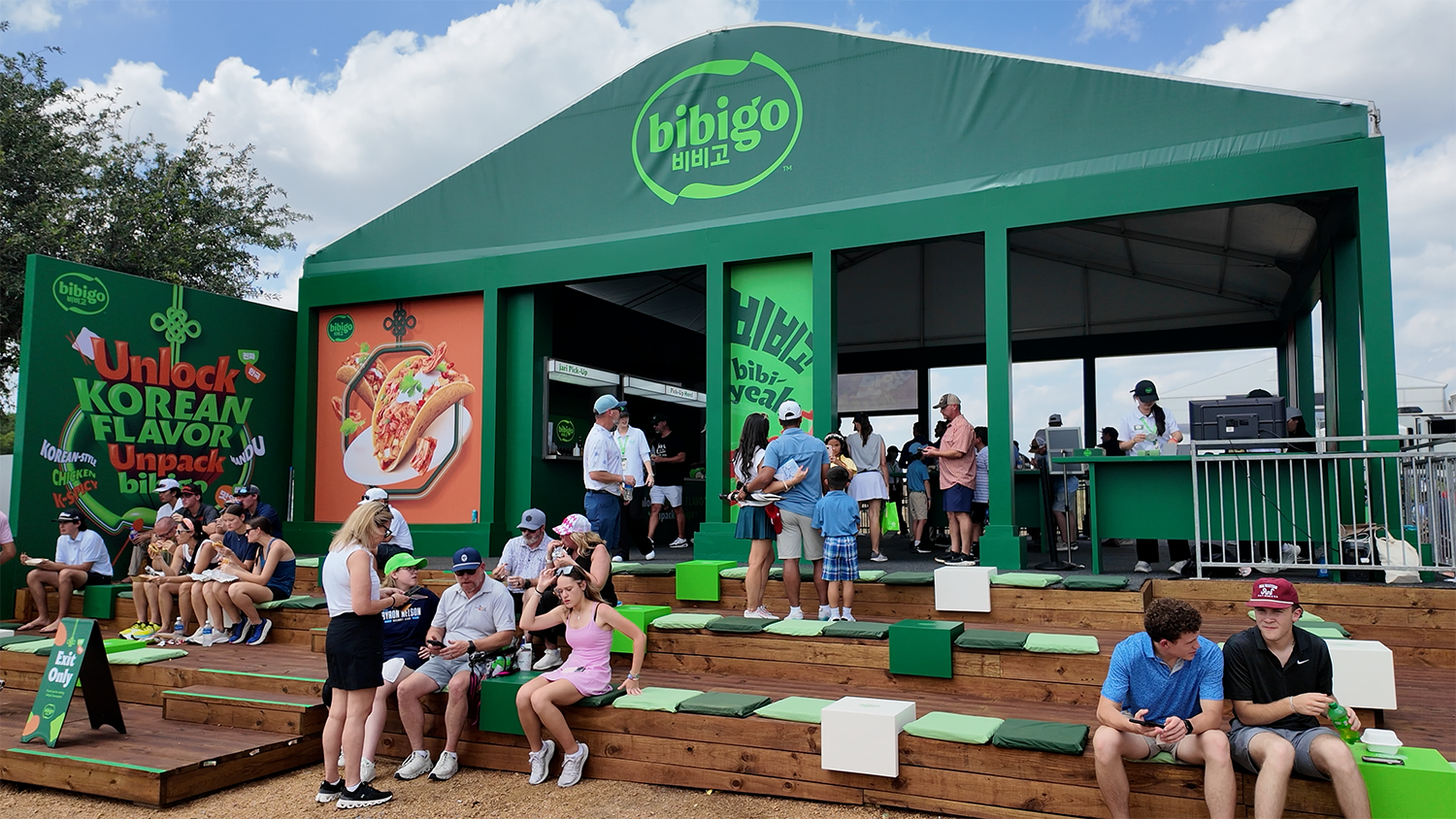
An even more interesting scene unfolds deeper inside the tournament grounds. Hole 7 feels less like a concession area and more like a culinary destination. If one had to describe it, it feels as though a Korean restaurant along the Han River had opened, temporarily, inside a golf course.
Here, visitors can enjoy chef-collaboration menus created especially for the event. Chef Yoo Yong-wook of Culinary Class Wars, Michelin two-star chef Park Jung-hyun, and Beau MacMillan, winner of the popular U.S. program Iron Chef, each reinterpreted core bibigo products such as mandu, chicken, and kimchi in their own way. For spectators, it becomes the kind of moment that makes them think, “You can eat this at a golf tournament?” It is perhaps the most direct and compelling way of demonstrating both the quality and culinary credibility of K-food.
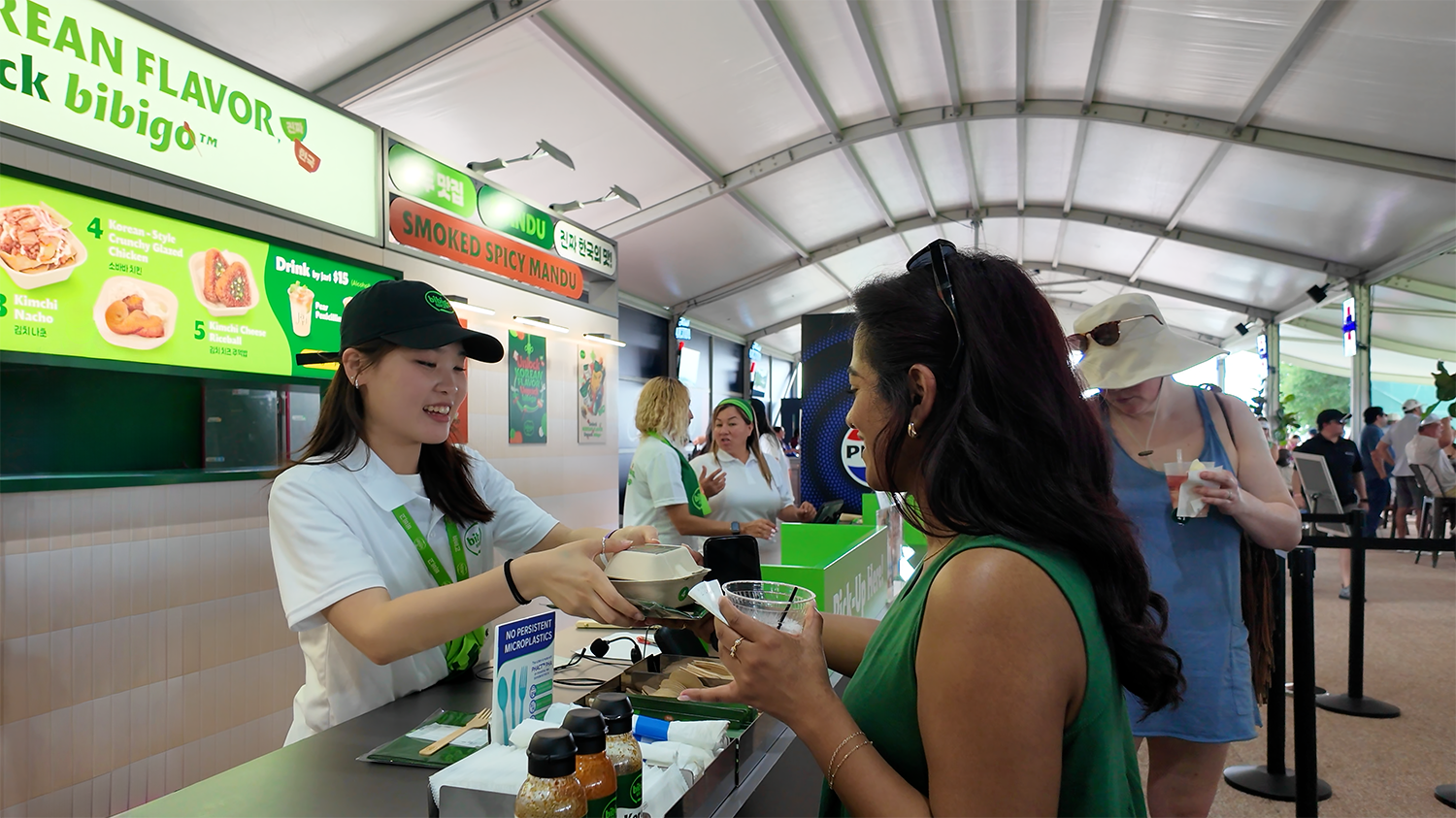
A different kind of experience awaits at Hole 17. Lighter menu items, such as gochujang tacos, are served there, paired with cocktails made using Korean distilled spirits. Designed so that guests can enjoy Korean-style cocktails made with Munbaesul and Gamuchisoju alongside Korean dishes, the experience goes beyond simply letting people say they have tried the food. Instead, it leaves them thinking, “This pairing works better than I expected,” or “I didn’t know Korean food could be enjoyed like this.” Through the harmony of food and drink, the event presents Korean gastronomy in a more layered and immersive way.
K-Food Is No Longer Remembered as a Product, but as an Experience
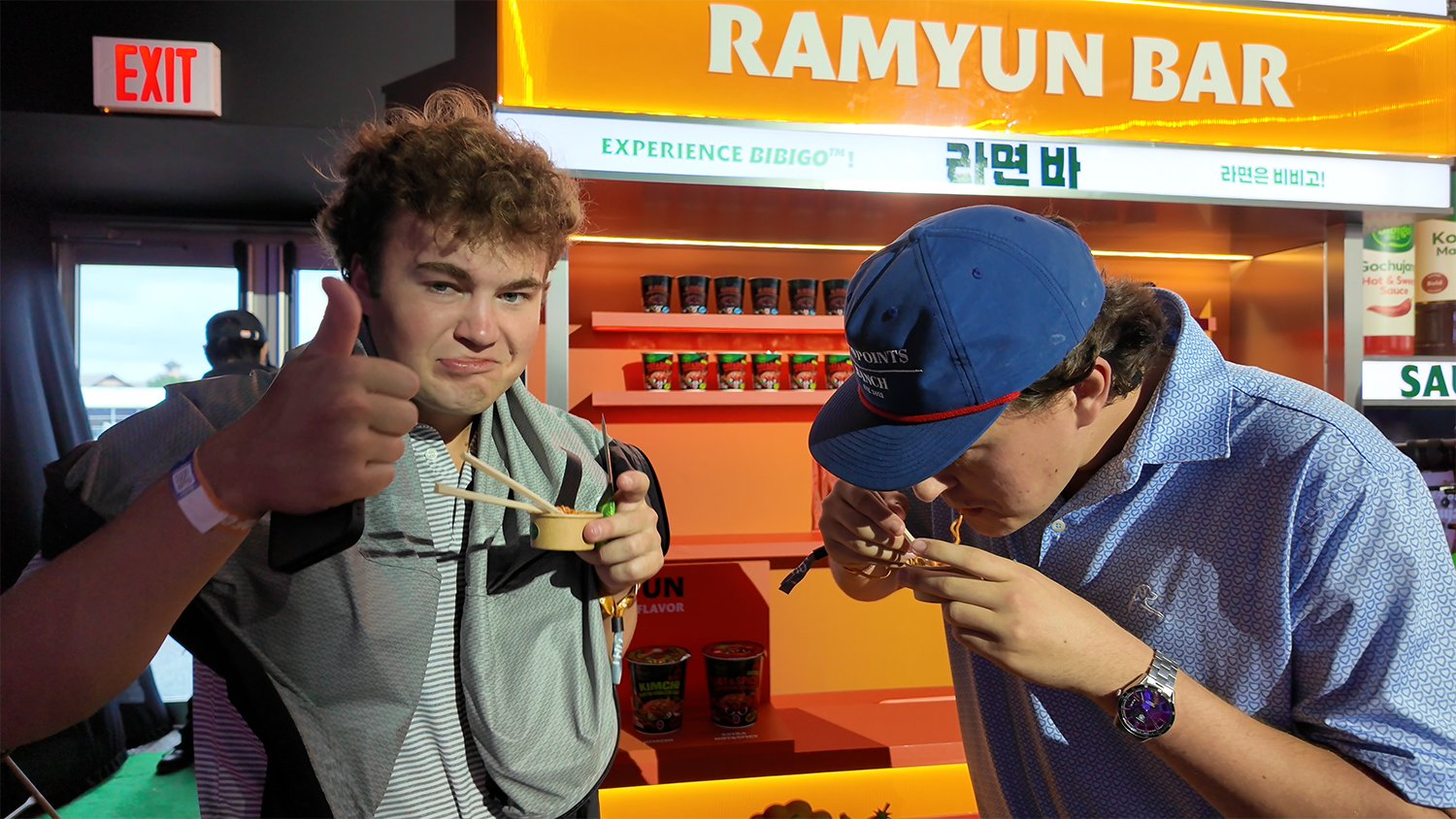
What matters is this: people who came to enjoy a sporting event are leaving with an experience of culture. K-food is no longer something defined only by products on a retail shelf. Once people taste it, engage with it, and share it on site, it becomes an experience—and that experience naturally opens the door to Korean culture more broadly.
That is ultimately why players are often the first to bring up the food, and why galleries find it hard to walk past bibigo concessions without stopping. As this year’s THE CJ CUP in Texas comes to a close, one question remains: what memories will stay with people the longest?